

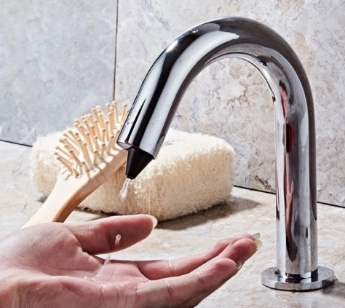
The motion sensor is usually an infrared sensor or a capacitive sensor that detects hand movements. When a user places their hand beneath the sensor, it sends a signal to the pump, which activates and dispenses liquid soap or hand sanitizer gel.
The pump contains a motor or a solenoid valve that provides the necessary pressure to move the gel or soap from the container to the nozzle. The nozzle is designed to deliver a controlled amount of liquid onto the user's hand without making any mess.
The container is usually refillable and has a maximum capacity ranging from 500 ml to 1 liter, depending on the model. To refill the container, one needs to open a cap or a lid, pour in the sanitizer gel or soap, and close the lid.
In conclusion, automatic hand sanitizer gel soap dispensers work through a simple mechanism, consisting of a motion sensor, a pump, and a container. The sensor detects hand movements, which trigger the pump to dispense the liquid. The pump provides the necessary pressure to move the gel or soap from the container to the nozzle. With this touchless technology, we can avoid cross-contamination and reduce the spread of germs and viruses.